

AI Warehouse Optimization is becoming a critical capability for manufacturing organizations looking to move beyond inbound automation and achieve true operational efficiency.
While systems today can capture and process large volumes of data, many warehouse operations still rely heavily on manual decisions — especially when it comes to storage, movement, and space utilization. This creates a gap between data availability and decision quality.
At Yokogawa Votiva Solutions (YVS), we address this gap by introducing AI Warehouse Optimization (Y-AIWO) — an intelligent layer that transforms warehouse data into actionable, system-driven decisions.
The Real Challenge: Your Warehouse Is Running — But It’s Costing You
In many industry, warehouse operations appear to be running smoothly on the surface. However, underlying inefficiencies often exist due to how decisions are made:
- Storage is assigned based on available space rather than optimal placement
- Picking paths grow longer as inventory becomes less structured
- Warehouse space is underutilized despite increasing capacity pressure
- Batch and expiry handling (FEFO) is applied inconsistently
- Teams rely on experience instead of system-driven logic
These inefficiencies may not be immediately visible, but they accumulate over time — driving up operational costs without clear root causes, slowing down fulfillment despite seemingly stable operations, and increasing the risk of write-offs, product damage, and lost inventory value.
From Autonomous Inbound to Warehouse Optimization
With autonomous inbound in place, your organizations already benefit from:
- Clean, structured data extracted from supplier documents
- Inbound transactions prepared before goods arrive
- Item-level tracking established from the point of entry
This creates a reliable foundation for optimization. AI Warehouse Optimization builds on this foundation by ensuring that every inbound item is not only recorded — but also stored, moved, and managed in the most efficient way once it enters the warehouse.
What is YVS AI Warehouse Optimization (Y-AIWO)?
AI Warehouse Optimization introduces a layer of operational intelligence that connects data, decision-making, and execution within the warehouse.
Instead of relying on static rules or manual adjustments, YVS designs AI models that continuously evaluate warehouse conditions including inventory characteristics, storage capacity, and movement patterns to determine how operations should be executed.
These decisions are not isolated recommendations. They are translated into actions and executed directly within ERP systems such as Dynamics 365, SAP, and other enterprise platforms, ensuring alignment with existing business processes.
Core Capabilities of AI Warehouse Optimization
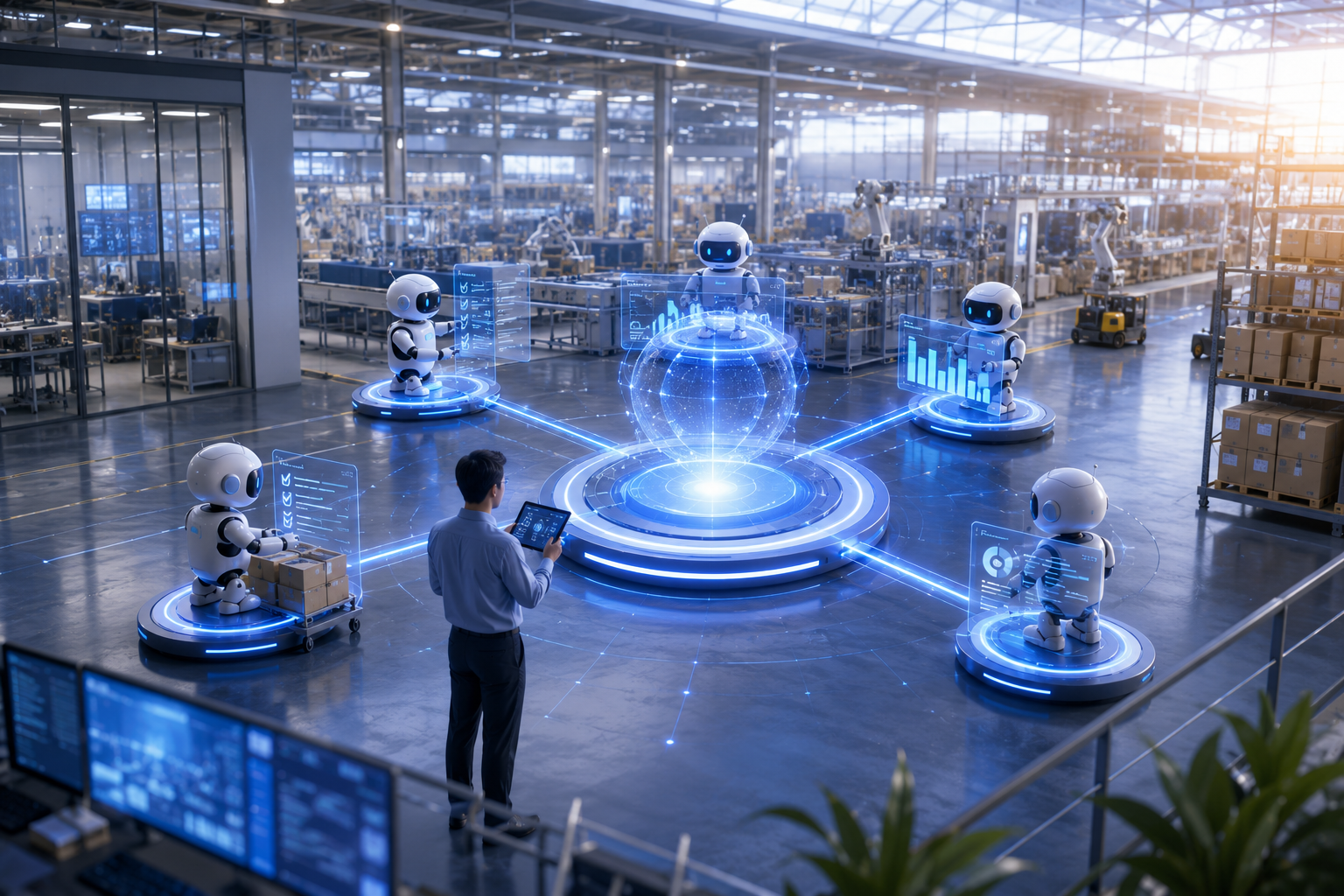
Instead of operating as a single function, Y-AIWO combines multiple AI capabilities into a unified optimization framework.
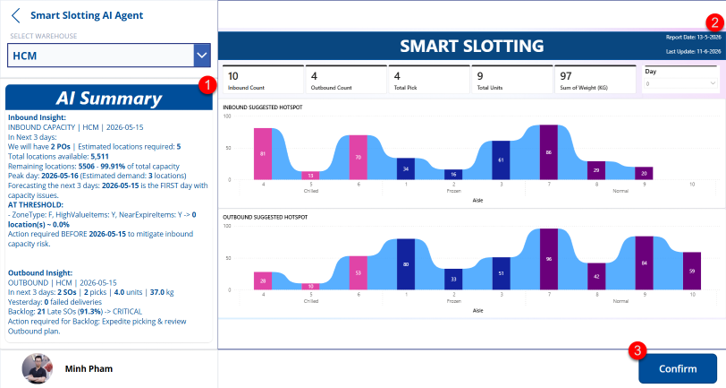
1. AI Smart Slotting — Optimizing Where Inventory Should Be
One of the biggest inefficiencies in warehouse operations starts with a simple question: Where should items be stored?
In most cases, this decision is made based on available space rather than operational logic, leading to long-term inefficiencies. AI Smart Slotting addresses this by analyzing inventory characteristics, movement patterns, and operational constraints to determine optimal storage locations.
In operational terms, this results in:
- Storage locations aligned with actual picking and movement patterns
- Logical grouping of items based on batch, expiry, or product type
- Automatic application of FEFO principles
- Better utilization of warehouse space
-> Storage decisions become more structured and aligned with real operational behavior. Picking distances are reduced as items are placed closer, leading to faster and more efficient warehouse movement. Storage space is also utilized more effectively without the need for physical expansion, while inventory is managed more consistently through better handling of batch and expiry requirements.
2. AI Analytics — Turning Warehouse Data into Actionable Insights
Even with data available, many warehouse teams struggle to turn it into meaningful insights. Without real-time visibility, decisions are often delayed or based on outdated information — making it difficult to respond effectively to operational changes.
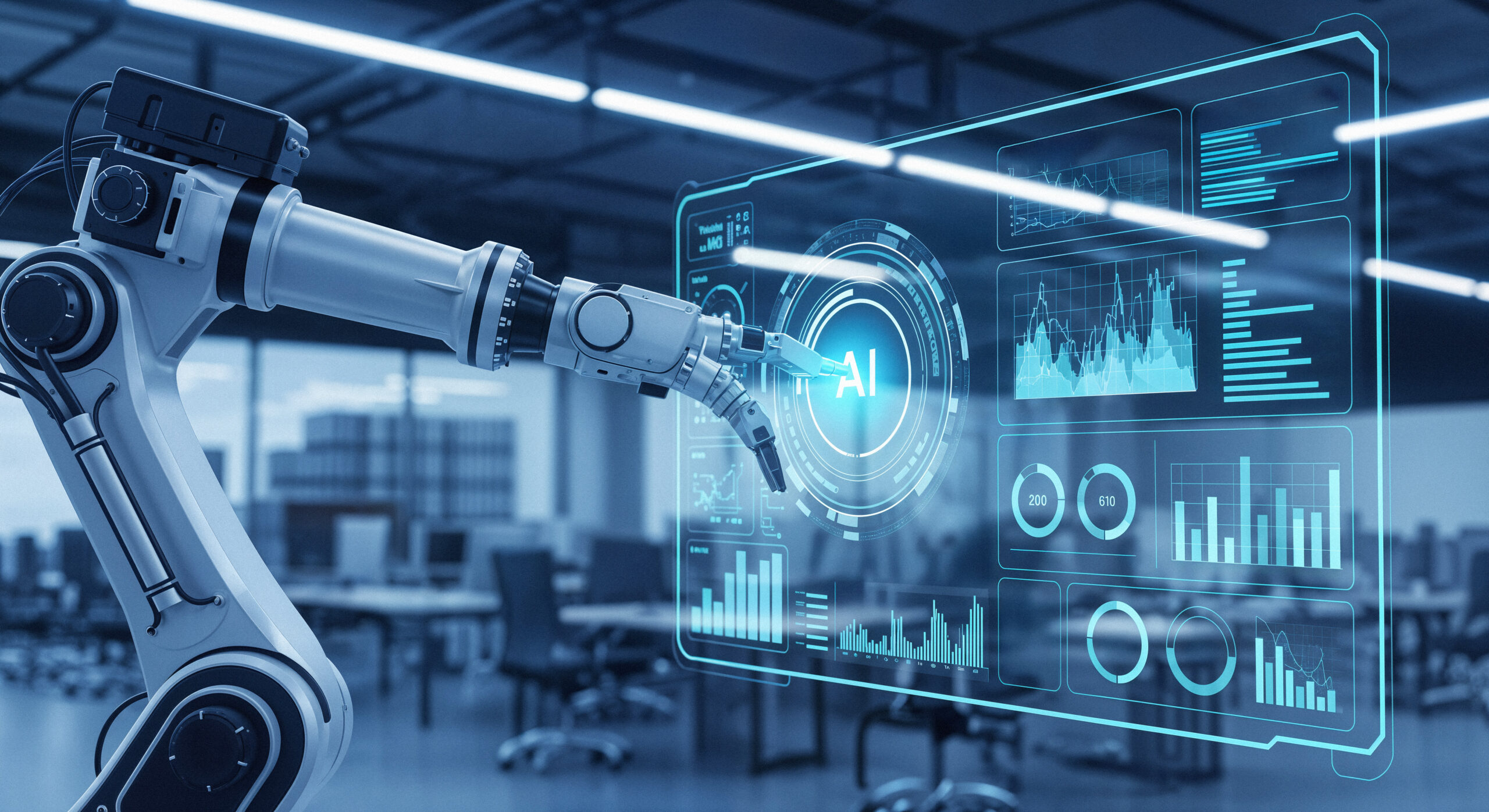
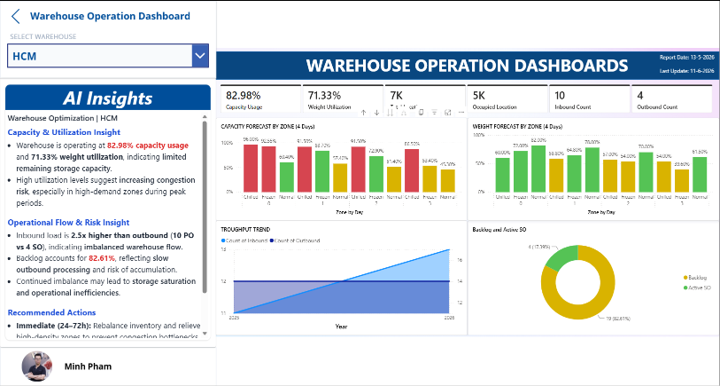
AI Warehouse Optimization addresses this by integrating AI-powered analytics (via Power BI) that continuously monitor warehouse performance and conditions, to provide
- Real-time monitoring of warehouse performance
- Capacity tracking and overload alerts
- Visibility into inbound, outbound, and inventory trends
- Proactive identification of operational risks
-> Warehouse operations shift from reactive to proactive management. Teams gain clearer visibility into capacity, performance, and operational trends, allowing them to identify bottlenecks early and take action before issues escalate.
3. AI Assistant — Making Warehouse Data Accessible
Another common challenge is not the lack of data, but the difficulty in accessing and interpreting it. In many cases, retrieving insights requires manual reports or specialized knowledge, slowing down decision-making.
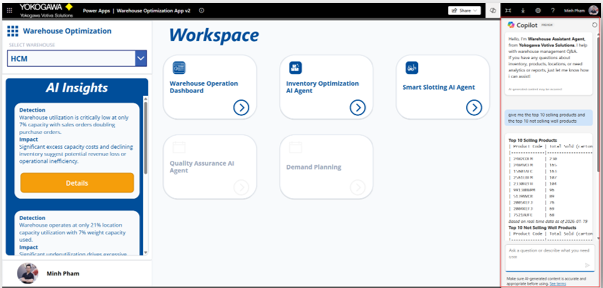
AI Warehouse Optimization introduces an AI Assistant (Copilot-based) that allows users to interact with warehouse data more naturally.
With this capability, users can:
- Query warehouse data using natural language
- Retrieve operational insights instantly
- Reduce dependency on specific individuals or reports
-> Decision-making becomes faster and more accessible across the organization. Users no longer depend on manual reports or specific individuals to retrieve information, as insights can be obtained instantly through natural interaction.
Built on a Scalable, Enterprise-Ready Platform
AI Warehouse Optimization at YVS is developed as part of a scalable architecture built on the Microsoft ecosystem. This ensures that optimization capabilities are delivered within a secure, flexible, and extensible environment aligned with enterprise systems.
The solution leverages:
- Power Apps for intuitive operational interfaces
- Azure for data processing and AI capabilities
- Copilot Studio for orchestrating AI-driven workflows
- Power BI for advanced analytics and visibility
Designed to operate seamlessly within existing enterprise environments. The solution integrates with ERP systems such as SAP, Dynamics 365, and others, while also connecting with yourWMS applications to support on-site execution. More importantly, AI-driven decisions are not isolated recommendations — they are synchronized directly into operational workflows, ensuring that optimization is consistently applied in real warehouse operations.
How AI Warehouse Optimization Differs from Traditional Systems
Traditional warehouse management systems are designed to record transactions and execute predefined processes. While this provides operational control, it does not fundamentally improve how decisions are made. AI Warehouse Optimization introduces a shift in approach. Instead of focusing solely on execution, it enhances the decision-making layer that drives warehouse operations.
- From task execution → to decision optimization
- From manual analysis → to data-driven recommendations
- From reactive operations → to proactive management
- From fixed logic → to continuous improvement
- From operational support → to strategic value creation
This transition enables warehouses to move beyond control and toward intelligent operations.
From Operational Efficiency to Strategic Warehouse Performance
AI Warehouse Optimization enables organizations to move from reactive operations to more structured, data-driven warehouse management.
This shift delivers clear operational improvements:
- Shorter picking paths through optimized storage decisions
- Better space utilization without physical expansion
- Reduced expiry-related risks
- Less time spent analyzing data, more time executing decisions
At the same time, warehouse operations become more consistent and less dependent on individual experience. More importantly, the warehouse evolves beyond execution — becoming a system that continuously improves performance and supports long-term operational growth.
Work with Yokogawa Votiva Solutions
AI Warehouse Optimization at YVS is designed for enterprise environments where control, security, and compliance are critical. Our approach ensures that every AI-driven action operates within defined business processes — maintaining data integrity, system security, and full traceability aligned with governance standards.
Yokogawa Votiva Solutions is certified with internationally recognized standards, including:
- ISO 9001:2015 for quality management
- ISO 14001:2015 for environmental management
- ISO 45001:2018 for occupational health and safety
These certifications reflect our commitment to delivering solutions that are not only innovative, but also reliable, secure, and enterprise-ready.
Contact us to explore how AI Warehouse Optimization can be implemented in your manufacturing operations.